How to Set Up the Perfect Self-Tape at Home: Lighting, Framing & Eyeline

A great self-tape doesn't need an expensive camera or a studio. It needs to get out of the way of your performance. Casting is buying a thought behind your eyes and a real reaction to another person — everything technical exists to make that read clearly. Here's how to set up a clean, professional self-tape at home.
Lighting: soft, frontal, and flattering
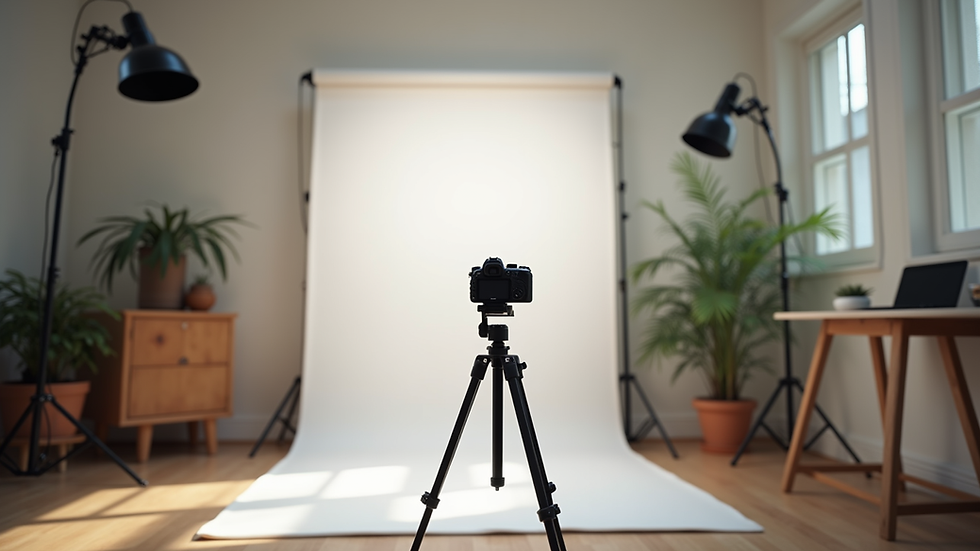
Aim for one soft key light slightly to camera-left and a gentler fill on the opposite side. You want low-to-moderate contrast, smooth falloff, and clean catchlights in your eyes — no hard shadows or hot spots. The most common lighting failure is dark hair or wardrobe disappearing into a dark background. Fix it by stepping forward off the wall, adding a little separation light, or choosing a lighter, cleaner backdrop.
Framing: centered, chest-up, locked off
Frame a centered, chest-up medium close-up with comfortable headroom, and lock the camera off — no drifting or handheld wobble. If you commit physically on a big beat and find yourself dipping out of frame, don't shrink the performance; frame one size wider as a safety so your commitment never costs you the shot.
Eyeline: keep your reader at the lens
Eyeline is the single most reliable craft signal on tape. Place your reader as close to the lens as possible — roughly six inches off it, at eye level. A reader sitting too wide throws you into profile and leaks energy sideways, which reads theatrical. Breaking eyeline is fine when it's a motivated beat, as long as you find your partner again afterward. The one thing to avoid: eyes drifting to a monitor or reading device.
Sound and background
A quiet room beats a fancy mic. Kill echo and background noise, keep the frame uncluttered, and use a clean, neutral backdrop — a muslin or a simple saturated color reads far more professional than a busy living-room wall. Record one clean, continuous take whenever you can.
The bottom line
Get the technical right once and you stop thinking about it — which frees you to do the only thing that actually books the room: make a specific, truthful choice and really listen. Set the room up to disappear, and let the work show.

Comments